The Event is One Day. The Content Should Work for Months.
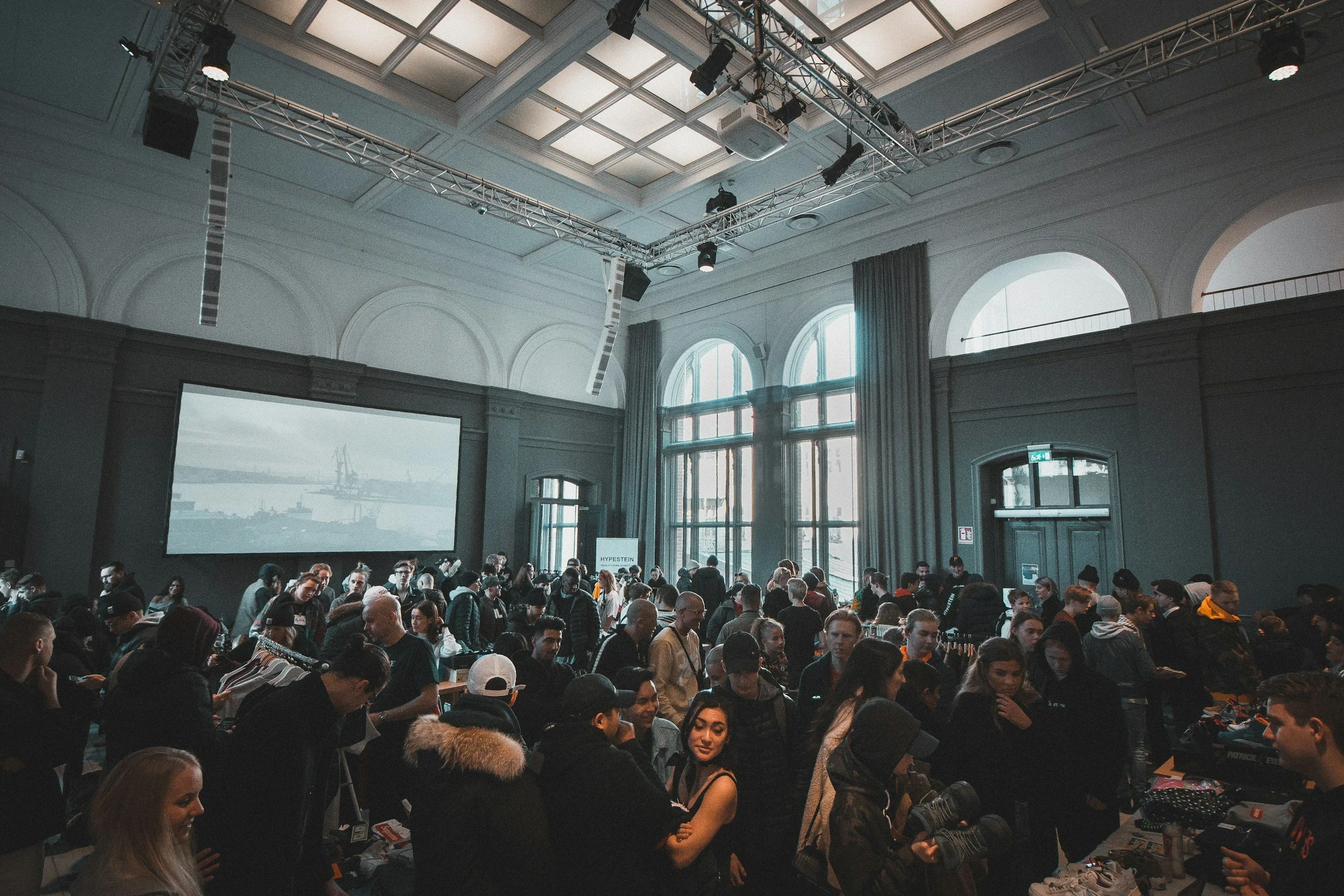
The event itself may last a day. The ideas and stories created around it can work for much longer.
A corporate event can take months to organise and disappear in an afternoon.
The venue is ready. Speakers are prepared. Teams build presentations. Employees travel. Senior leaders make time in already crowded calendars. There may be workshops, panels, demonstrations, recognition moments and conversations that bring together people who rarely share the same room.
Then Monday arrives…
A gallery of photographs is uploaded, perhaps a highlights video is shared, and most of the knowledge created during the event begins to fade.
That is a missed opportunity.
In 2026, in-person events remain strategically important. Industry research continues to show strong demand for face-to-face experiences, while organisations are becoming more selective about what deserves to be an event in the first place. At the same time, event content increasingly has a second life on demand.
The useful shift is to stop thinking of video and photography as documentation of an event and start thinking of the event itself as a concentrated content opportunity.
THE EVENT SHOULD NOT BE THE FINISH LINE
There is nothing wrong with a two-minute highlights film. It can capture energy, recognise the people involved and give those who were not there a sense of what happened.
The problem comes when that is the only planned output.
A conference, town hall, recognition event, learning day or internal expo can contain dozens of useful ideas. A subject-matter expert may explain something exceptionally well in a five-minute conversation. A panel may surface a question relevant to hundreds of colleagues. A project team may have a strong story that deserves more than a passing photograph.
If the production brief only says "capture the event", much of that value will never be identified.
A better brief asks a different question:
What should still be useful from this event three months from now?
That changes what the crew looks for and what the organisation receives afterwards.
PLAN THE CONTENT BEFORE THE AGENDA STARTS
The strongest event content usually comes from planning a small number of deliberate capture opportunities around the live programme.
That might include short interviews with speakers before their session, quick reflections from attendees, concise explanations from project teams, a leadership message recorded while the relevant people are already on site, or a quieter interview with someone whose story deserves more space.
The important part is that these are planned.
Trying to find six interviewees at 3.30pm while everyone is networking and preparing to leave rarely produces the best result.
Before the event, identify the themes that matter. Decide which speakers or participants can speak credibly about them. Allocate ten or fifteen minutes where necessary. Find a suitable interview location. Know which outputs are needed.
The event still feels spontaneous, but the useful content is no longer left to chance.
THINK IN CONTENT LAYERS, NOT ONE FINAL VIDEO
A practical event-content plan can have several layers.
The first is the immediate layer: photographs, a short highlights edit and perhaps a same-day or next-day clip. This serves the moment.
The second is the knowledge layer: individual speaker clips, panel excerpts, interviews, demonstrations or short explainers. These can feed an intranet, learning hub, department page or future communication campaign.
The third is the human layer: reactions, employee voices, behind-the-scenes moments and short stories about the people involved. These can support culture, employer brand and recruitment communications.
The fourth is the archive layer. Good footage of leaders, teams, facilities, interactions and branded environments becomes useful B-roll for future films and communications.
One event can therefore generate assets with very different lifespans.
Not every event needs all four. The point is to decide before filming rather than discovering afterwards that the footage was never captured.
THE MOST VALUABLE MOMENTS ARE NOT ALWAYS ON STAGE
Organisations naturally focus cameras on the keynote speaker.
But some of the strongest material often happens elsewhere.
It can be a colleague explaining a project at an exhibition stand. A question from the audience that reveals what people genuinely care about. Two departments meeting because the event brought them together. A senior leader having an informal conversation rather than delivering a scripted message.
These moments give an event texture.
They are particularly valuable for internal communications because they show participation rather than simply telling employees that an event was successful.
For culture-focused projects, that distinction matters. A polished stage and a large audience can show scale. Genuine interaction shows culture.
CAPTURE FOR THE CHANNELS THAT WILL ACTUALLY USE IT
Another common mistake is filming everything in one format and deciding later where it might go.
A widescreen event film may work perfectly on an intranet or presentation screen, but a short employee quote might be more useful vertically for a mobile-first internal platform. A panel discussion may need a clean full-length recording for a learning library. A silent display in a canteen may need captions permanently visible.
Planning these uses affects framing, audio, interview length and graphics.
It also affects consent and approvals, particularly in corporate, healthcare and regulated environments. If a clip may eventually be used externally, that should be understood at capture rather than assumed later.
For pharma and healthcare organisations, content planning also needs to respect internal review processes, confidentiality, patient or product sensitivities, and the distinction between internal and external communication. Capturing more content is useful only when it remains appropriate and manageable.
DO NOT RECORD EVERYTHING JUST BECAUSE YOU CAN
A content-first approach does not mean putting cameras everywhere.
More footage can actually create more work, slower approvals and a library nobody has time to navigate.
The goal is selective capture.
If a one-hour panel contains three genuinely useful exchanges, those three sections may have more long-term value than publishing the full hour. If ten people say roughly the same thing in interviews, the organisation probably does not need ten separate videos.
Editorial judgement matters.
Before the event, define a small number of communication objectives. During production, capture material against those objectives. Afterwards, edit the strongest material rather than automatically turning every recorded minute into a deliverable.
That is how event coverage becomes content strategy.
MEASURE MORE THAN THE HIGHLIGHTS FILM
The value of event content can also be measured differently.
Instead of asking only how many people watched the event recap, look at how the assets travelled.
Did a speaker clip support a later internal campaign? Did an interview become part of onboarding? Was a project story reused by another department? Did photography support the annual report or recruitment material? Did an on-demand recording allow people who could not attend to access the session later?
This is where the return becomes more interesting.
The event has already absorbed much of the cost of bringing the right people, ideas and environment together. Thoughtful capture can extend the useful life of that investment.
MAKE THE DAY WORK HARDER
An event will always be about the people in the room.
That should not change.
But the room does not have to be the limit of its impact.
When communications, event and production teams plan together early, a single day can generate material for weeks or months without making the event feel like a film set.
The goal is not to create more content for the sake of it. It is to recognise the useful ideas, voices and moments that already exist and give the best of them somewhere to go next.
For organisations investing heavily in events, that is a much stronger brief than simply "capture what happened."
PRACTICAL TAKEAWAYS
1. Decide before the event what should still be useful three months later.
2. Identify interviewees and content themes in advance.
3. Plan outputs in layers: immediate, knowledge, human and archive.
4. Capture for the actual channels where the material will live.
5. Treat consent, confidentiality and review requirements as part of pre-production.
6. Record selectively rather than attempting to preserve every minute.
7. Measure reuse and usefulness, not only views on the highlights film.
Corporate EventsEvent VideoContent StrategyInternal CommunicationsThought LeadershipEmployee EngagementContent Repurposing